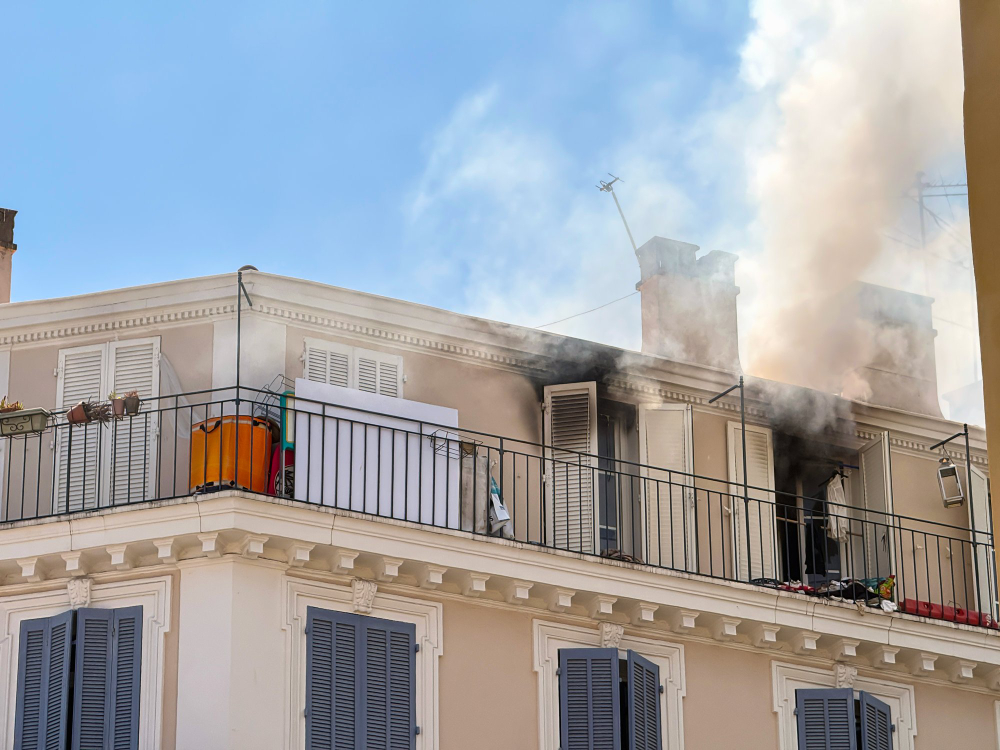
Does home insurance cover fire damage, from house fires to wildfires?
Amelia Szulc
Share this article
A pan left on the stove, a lightning strike, a wildfire moving toward your neighborhood. Fire is one of the oldest risks homeowners insurance was built for. If you’re asking does homeowners insurance cover fire, the answer for most standard policies is yes. This article explains what fire coverage pays for, how accidental fires and wildfires are handled, where the limits sit, and what to compare before you choose a policy.
In a nutshell:Standard homeowners insurance covers fire damage, including accidental fires and most wildfires, but your limits and endorsements decide how fully you recover.
Does homeowners insurance cover fire damage?
Yes. Fire is a covered peril on standard homeowners policies, including the common HO-3 form. When a fire damages your home, several parts of your policy work together:
Coverage part
What it pays for after a fire
Dwelling (Coverage A)
Repairing or rebuilding the house itself, including attached structures like a garage
Other structures (Coverage B)
Detached structures such as a fence, shed or detached garage
Personal property (Coverage C)
Furniture, clothing, electronics and other belongings damaged or destroyed
Loss of use (Coverage D)
Extra living costs, such as a rental or hotel, while your home is unlivable
Personal liability
Damage or injury to others if a fire that started at your home spreads to a neighbor’s property
Fire damage rarely stops at flames. Standard policies also respond to smoke and soot damage, and to water damage caused by firefighters putting the fire out.
Is fire insurance included in homeowners insurance?
Yes. If you own and live in your home, you don’t need a separate fire insurance policy. Fire protection is part of a standard homeowners policy.
Standalone fire policies do exist. They’re usually called dwelling fire policies, and they’re built for situations a homeowners policy doesn’t fit:
A home you rent out to tenants.
A home that sits vacant or unoccupied.
A property that doesn’t qualify for a standard homeowners policy.
So, is fire insurance included in homeowners insurance for a typical owner-occupied home? It is. A dwelling fire policy only enters the picture when the property is used differently.
Does home insurance cover accidental fire?
Yes. Most house fires are accidents, and standard policies cover accidental fires even when someone made a mistake. A grease fire, a forgotten candle, a space heater too close to the curtains or an electrical fault are all typical covered causes.
The main exceptions are narrow:
Intentional fires. A fire set on purpose by the policyholder, or by someone acting for them, isn’t covered.
Long vacancies. Some policies limit coverage when a home has been empty for an extended period. Check your policy’s vacancy clause before a long trip or a move.
If you’ve been wondering does home insurance cover accidental fire caused by a family member, the answer is usually yes, as long as nobody set it deliberately.
In most cases, yes. A wildfire is a fire, so standard policies treat wildfire damage the same way they treat a house fire. The dwelling, other structures, personal property and loss of use coverages all apply.
Many policies also include civil authority coverage. It pays extra living expenses for a limited time when officials order an evacuation, even if your home isn’t damaged. Check your policy for how long this coverage lasts.
Where wildfire coverage gets harder
Ready to compare insurance quotes?
See how fire coverage, limits and deductibles compare across 100+ insurers.
The real question in high-risk areas is often availability, not coverage. Where wildfire risk is high, some insurers stop writing new policies, raise premiums or choose not to renew existing ones.
In some states, a FAIR Plan offers basic fire coverage when the private market won’t. FAIR Plan policies are often limited, so homeowners pair them with a supplemental policy. Read what is DIC insurance to see how that pairing works.
So, does homeowners insurance cover wildfire damage where you live? It depends less on the peril and more on which insurers are writing policies in your area.
What fire coverage limits or leaves out
So, does homeowners insurance cover fire damage in full? Not always. A policy can cover fire and still leave you short. These are the gaps that matter most:
A dwelling limit below rebuilding cost. Your limit should reflect what it costs to rebuild, not your home’s market value. After a large wildfire, local building costs can rise fast.
Building code upgrades. Rebuilding to current code can cost more than restoring what stood before. Ordinance or law coverage helps pay that difference.
Actual cash value on belongings. Actual cash value subtracts depreciation. Replacement cost pays what it costs to buy new items today.
Lower limits on trees and landscaping. Trees, shrubs and plants usually carry a much smaller limit than the house.
Two endorsements are worth asking about. Extended replacement cost adds a buffer above your dwelling limit. Guaranteed replacement cost, where available, pays the full rebuild cost. To set the base limit correctly, read how much home insurance do I need.
When insurers compete for your policy, price is the opening number, not the verdict. Two quotes can look similar and still pay very differently after a fire. Before you choose, compare these points side by side:
Dwelling limit and whether it matches your estimated rebuild cost.
Replacement cost or actual cash value on personal property.
Extended or guaranteed replacement cost on the dwelling.
Ordinance or law coverage and its limit.
Loss of use limit and how long it lasts.
Deductible, including any separate deductible that applies to specific perils in your area.
If a fire has damaged your home, start with safety. Then take these steps in order:
Contact your insurer to start the claim. Your insurer handles the claim directly.
Document the damage with photos and video before you clean up.
Prevent further damage where it’s safe, such as covering broken windows.
Keep every receipt for hotel stays, meals and other extra costs.
Hold on to damaged items until the adjuster has seen them.
Key takeaways
Fire is covered. Standard homeowners policies cover fire damage to your home, other structures and belongings.
No separate fire policy is needed for an owner-occupied home. Dwelling fire policies are for rentals and vacant homes.
Accidental fires are covered, even when someone made a mistake. Intentional fires are not.
Wildfire damage is usually covered. In high-risk areas, the challenge is finding an insurer willing to write the policy.
Limits decide your recovery. Check your dwelling limit, replacement cost terms and ordinance or law coverage.
Compare fire coverage with Nsure
At Nsure, we make 100+ insurers compete for you. You answer once, and we share your details with insurers in our network rated A- or better. You then see real quotes side by side and choose on price and coverage. A quote can change after the insurer reviews your details. Using Nsure is free: the insurer you choose pays us a commission, and you’re never obliged to buy or switch. Prefer to talk it through? Our licensed agents are available at 561-288-9700, Monday to Friday, 9 AM to 5 PM ET.
Make 100+ insurers compete for you. Compare insurance prices. Understand the coverage.
Amelia Szulc
About the author
Amelia is a UX writer whose job is to make sure no one has to read a sentence twice. With a background in literature and years of experience in editing and content design, she has spent a long time thinking about words — not the impressive ones, but the right ones. Her goal is to simplify complex topics and write in a language that resonates with people.